
The Blog Library
How to Get Over Your Fears and Raise Your Prices
 “At all levels of income, the typical response is that one needs 20% more to be happy.”
-Richard Easterlin
The photographer’s equivalent to this statement is: “Whatever you charge for your work, the typical response is that you’re 20% too expensive.” Like clockwork, I’ve been told my photography is too expensive at $75, $100, $300, $500, $1200, and $2000 price points. Why?
Well, for one thing:
Photography is a victim of the anchoring bias: Our tendency to grab on to a certain number and weigh everything else against it.
Even if that anchoring number has been pulled out of the air, or is irrelevant to the situation, people will cling to it when evaluating everything else. For example, a person from a small town might think taxis in their town are too expensive. But a New Yorker who visits that small town will think “Whoa, these taxis are cheap!!”
It’s the same taxi and the same price – but reactions are different because the two people have a different anchor for how much a taxi “should” cost.
People are used to paying $5 for 50 prints at the corner grocery store and $30 for a packet of school photos. Thus, most people’s “anchor” for photography pricing is somewhere between $5-$30. So they wonder: Why would they want to lay down a hundred bucks, let alone two grand, for your services?
The hard truth is, no matter what you charge, you will always be too expensive to someone.
Especially those whose “anchor” is a grocery store. You might as well price your work profitably, and in the meantime, work to “re-anchor” your target clients to your price range. Here’s how:

1) Create your own profitable pricing list and stick to it. Don’t steal someone else’s pricing because it “looks right” – you need to understand exactly how you arrived at your numbers. If you take your pricing from some other photographer, it’ll be harder to stick to your guns when clients pressure you to accept a lower rate. When you feel desperate for work, one price grabbed out of the air won’t be much different than another. Understanding your own overhead costs and profit margins helps you be firm, because you’ll quickly see what that discount would really cost you.
**If you’re struggling with setting profitable pricing, I recommend The Photographers Pricing Guide Workbook by The Modern Tog (Affiliate Link).
2) Spell out to potential clients exactly why your services are worth what you charge. Most people understand why taxis are more expensive in NYC than in their hometown. But many people may not see the difference between your photos and a mall studio, except that your photos are taken at a park. (But since using the park was free, you shouldn’t be more expensive, right?)
Make sure your website describes in lavish, dazzling detail exactly what they will get from working with you. Blog regularly about the experience clients receive, how unhurried and fun each session is.
Make it clear how much effort you put in on their behalf, and what that means for their life and family. Only then will they see how their previous price anchors don’t apply to your business.
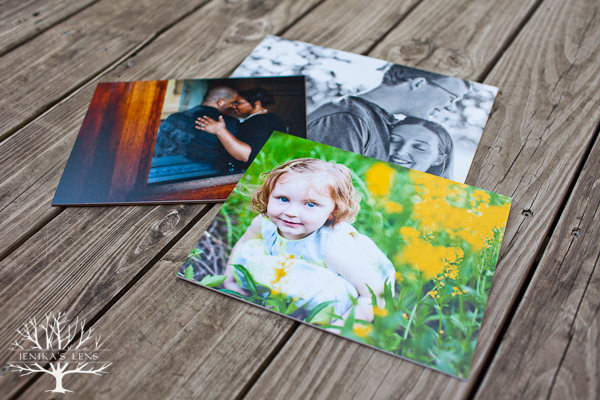
3) Don’t count on the quality of your work speaking for itself. Too many photographers fall into the trap of counting on clients to perceive the high quality of their photographs, and automatically believe that their services are worth more money.
But consider: when you started in photography, I bet you were more easily awed by ‘professional’ photographs. As you put in hundreds of hours creating and looking at photographs, you get progressively more picky about technical sloppiness.
Your clients are not photographers. They are not going to immediately recognize soft focus, clipped highlights and shadows, Photoshop overcorrections, etc. Some may honestly not see the difference between your honed skills and your neighbor down the street who just picked up a camera yesterday. There needs to be a more compelling reason for them to pull out the checkbook. You might make it a part of your regular blog conversation to post a few SOOC/post-processing comparisons, do a “year in review” and talk about how much you’ve grown over the year. Even non-experts can appreciate jumps in quality when they see things side-by-side:

4) Don’t change prices too often. Your current prices are an anchor for past clients. Wedding photographers are not aiming for repeat wedding clients (hopefully!), so they can raise their prices more frequently with less anchor damage. But a mother who did her newborn session with you may be shocked to come back at six months and find that your rates have doubled. It’s easier to set profitable pricing as soon as you are confident in producing professional-level work (which usually represents one significant jump). Explain to past clients that in order to be around to serve them long-term you have made some adjustments, but you value their business and look forward to working with them again. Then tweak only once or twice a calendar year thereafter.
People are not always explicitly aware that they have price anchors, or that they are using them to evaluate you.
They simply think “too expensive,” and move on. Thus, it’s important that you make it immediately and abundantly clear to clients that you’re in a totally different category, and what more they’ll get from working with you. It’s up to you to ensure that they don’t simply think “photography,” grab on to their grocery store price anchor, and move on.


I just came across your blog and I think it’s awesome! This is the first blog post I’ve read but I wrote down two things that I intend to implement. I’ve been a photographer for 9 years but I just started shooting boudoir photography about a year ago. In the past year, my skin softening technique has changed drastically and my first images are embarrassing! I could easily do a year in review post like you suggested and it would be dramatic to see the changes. But I just need to get over my pride in order to put my old, poorly processed images on my blog!
Hey Rayleigh! I totally know how you feel – my first images are cringeworthy, but to the point – that’s why you want to hire someone with advanced skills. Someone like YOU! If you pluck up the ‘courage’ to do it, please shoot me a link 🙂 Incidentally, readers love this kind of stuff – it shows you’re real and human and growing. More relatable than someone who tries to seem flawless, right?
I was really enjoying to read this post. This article is great because you said the truth. Usually I met a lot of people that are thinking that photography is simple and everyone can do it, but I would like to see how many of them will stay 3 and more hours with heavy cameras plus lens and a hard work on processing photos using Photoshop,Lightroom or other sofware. I can proudly say that Yes, I study, share, write, shot everyday. So, why people should no pay for my work?
You’re exactly right – it is hard work! And a lot of practice goes into it! Wishing you fabulous success in your business, thanks for your kind comment.
Love, love, love the section on how when we started out, we were awed by professional photos, and how clients don’t really see how our work is better than nonprofessional shots in crop, color, etc. So true! It is hard to remember sometimes thay our clients aren’t photographers!
It is easy to forget, isn’t it? I do it all the time, but yet I’m constantly reminded, especially when I get a blank stare when trying to explain something…. 🙂
Thanks for this post – very interesting reading, and a big help as I’m currently drawing up my Packages page and starting on bulking up my website before i start promoting! Will definatley be making sure I write about what goes into a full package, and where the value is. 🙂
Awesome, Georgia! Wishing you success with the changes you’re making – how exciting!
Great pointers and read!!!
🙂 Thanks Gerren!
you’re welcome
Thanks for this post Jenika! This kind of insight is always appreciated. Have an amazing 2012! 🙂
You’re welcome Michelle! Thanks for your kind comment. 🙂
Jenika: What a beautifully unusual name! This post contains great information! I am just a few months in to my photog business, after years of stock photography & weddings on the side. I am still a full time graphic artist. That being said – I am no where near opening my own studio. I am on location only. In the very short time I have been in business, I have learned so very much! Namely: A. I’ve priced myself below desired profit levels B. Online slideshow proofing & purchasing bites the big one. My question is: Do In-Home purchasing consultations freak people out? I hesitate to move over to this.
Kelley
Hello Kelley! I think a lot of us are on location only, so you can certainly run a profitable business that way. I do my sales a bit differently than a lot of photographers, but the short answer is no – in home sales don’t seem to freak people out. They love it! Wouldn’t you like it if you were redecorating your house, and someone came over and brought samples with them so that you could see what everything looked like in your own home? It eliminates a lot of guesswork, because you can make professional recommendations about what they could do with their photos in their own home. It’s a fabulously luxurious service, actually! It does require extra time per client, and so that needs to be reflected in your pricing.
I hope that answers your questions! I’ll post this comment on the facebook page and see if anyone else has anything to add…
Just wanted to add that in-home sales consultations are the way to go 🙂 I have found that my clients LOVE it, I help them with where to hang the portraits, what ones would look good together, etc. And there is nothing like holding a canvas above a crib (or other furniture)…. they just HAVE to have it after they see it there and how nice it would look. My sales averages have increased nearly 10 fold since starting in home ordering session. Give it a try just once and you won’t go back 😉
Thank you both VERY MUCH for your feedback! Clients seem to shy away from larger items, because it is out of their comfort zone – especially as they are put completely in the driver’s seat shopping from an online gallery. I think you are both correct – give them a luxury service that includes design consultation… I’m SOLD!
I’m implementing in person ordering sessions starting this year so I hope that they work out. I designed a 9 page Client Ordering Planner that I give out in my welcome package that gets the ball rolling and the clients thinking about what print products they want well in advance.
I’m actually pretty freaked out about doing things this way, but one of my business resolutions this year is to be more one on one with my clients and focus more on their experience with me.
Nice idea, Melissa. Good luck!
Oh this is the blog I need. I was just saying I need a psychology degree to work people out for this job!
I braved it, put up my prices..silence other than a few “too expensive” comments from people I thought I should target. Despite still being the cheapest around. I hoped they’d go away, google and realise I’m not too expensive. I’m now totally stuck as to what to do now!
Brave woman! Now’s the time to find your target client, and market like crazy to them. It’s always hard when you’re out of the starting gate with new pricing, but the right clients will come. You have to go where they are – the next step is finding where that is.
Hey Miss Jenika! Another great article. I tell you what I struggle with in the pricing structure is charging for my time. I think I cover the cost of the actual product pretty well, but don’t tack on anything extra for my time. Need to rectify that. I have a copy of Easy as Pie. Need to go back and work through it again!
Hey Sandy! Do you mean time in session or time in editing / work on the back end? Next time you have a session, you might try using a stopwatch or otherwise keep track of how long you spend on editing/order fulfillment/etc – I find that I usually lowball the number! That should help guide your markup on the products, and to help determine your sales goal. It’s tough, I know! EAP will definitely help 🙂 I llllllove it!
Thank you for a great post (and from the looks of it, a great blog – I will follow it on my blogroll!) … I look at some of the images from my first year and I too, cringe, that I was offering THAT! I’ll work on overcoming the while pride thing … I can see the value in showing “then vs now”! THANK YOU!
I also need to get over that pride/fear, Rayleigh! I’ve been thinking of doing a post like this because I’ve been doing newborns for a year now and the difference is incredible!
Thanks a lot – I really appreciated this!!
great post!!! I’ve been struggling with the thanks but no thanks inquiries – I think this will help!!
This is a great post! Thank you so much! I am aspiring to start a photography business this year and was very unclear about this aspect. The part about having a comparison for potential clients to look at is great. I always do a b4 and after for myself to remind myself that I AM doing a great job. Why shouldn’t potential clients be reminded too? 🙂 Puts some perspective to the value of your work.
I’m also pinning your blog and post as we speak 🙂
Just make sure if you blog about the awful past photograph, or post it on facebook, that it’s not one of your fans or friends. I can’t think of any of my old images that wouldn’t show someone who is a friend on fb.
Haha, true. I’d just pick some personal work that I did (not a client), and it’s about how you cast it. The goal is not to say “look how bad this was” but rather “here are some things I’ve learned over the past year.” If you, for example, did close-ups to show differences in sharpness, it wouldn’t reflect badly on the person in the image, but it’d show an improvement people can appreciate. You could then talk about how important sharpness is, especially as you enlarge the image. Etc. 🙂
Thanks for a great post. I am nowhere near going pro yet but in the stages of researching a dream. I know pricing will be my downfall as I am the “sorry I have to charge you” mentality. My heart and head both tell me you are so right, but I feel that my mouth will let me down on the day 😉 I have saved this on my faves to go back to when I move forward a little.
I have a few things:
Thanks for sharing this post, I got a lot of insite from this and it helped me understand where I was in my pricing was correct. Last year, 2010, I had a LOT of photo sessions, then I went up in my pricing, offering a little more, an online gallery with options to purchase, the CD with copyright, I know what you’re thinking, but wait, and 2 8×10’s, but I had very little sessions this past year 2011, so right after Thanksgiving, I dropped my price to less than half and got a few sessions, but I wasn’t satisfied with the AMOUNT of my sessions…
Next, I am tired of people inquiring about my pricing especially those that know that I am starting out trying to get into weddings, but still want it FOR NOTHING!!! Seriously, do they really think I could do a wedding for NOTHING!!! They have no idea how MUCH TIME AND WORK goes into it the AFTER!!!!! I was fortunate enough to go to a wedding where the bride let me take whatever pics I wanted, even tho she had a paid photographer there, she was generous for letting me get the pics to put on my website, and is purchasing photos from me, at least its a start, but so frustrating that I want to scream…. ugh.
Any suggestions??? Greatly appreciate it!
Oh and have you seen this, this touches on the same thing from a different perspective:
http://fototails.wordpress.com/2012/01/02/a-letter-on-my-doorstep-portraits-are-more-than-paper/
I truly loved this post! It is clear, concise and firm! Thanks for the advice and I will definitely be following your blog more often!
Thanks for this Jenika. Such a great article. I need to read this again and again. Keep writing – your ideas are amazing and a great resource for many of us. I’m very grateful!
I really needed this today. Thank you for writing this. I think you just saved my sanity! 😉
Thanks Amber – so glad! 😀
Very, very useful post. ““Whatever you charge for your work, the typical response is that you’re 20% too expensive”. Essence of photographers life 🙂